| News Details |
| Pakistan Betrayed Saudi Arabia | | 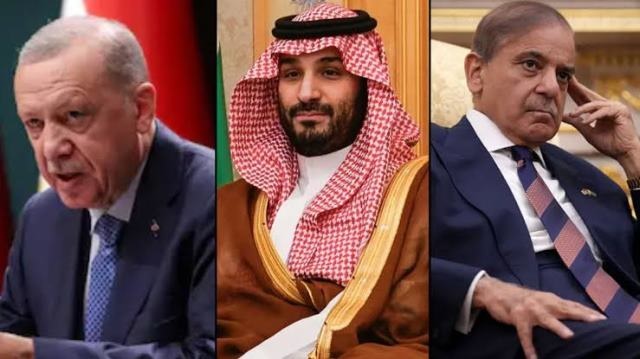
By Fatima Baloch
Pakistan has long been fooling Saudi Arabia and many other Arab countries by offering them security and promising to wage their wars against any aggression they face, while in return Pakistan obtains huge financial, economic and military assistance from these Arab countries, including Saudi Arabia, Qatar and Kuwait. The ongoing Israel–Palestine war started on 7 October 2023. The conflict quickly expanded beyond Gaza: Hezbollah opened a front against Israel from Lebanon, Iran and Iranian-aligned groups in Iraq and Syria became involved, and the Houthis in Yemen began attacking Israel and commercial shipping in the Red Sea. The confrontation subsequently escalated into direct Israel–Iran exchanges and, in June 2025, a 12-day Israel–Iran war in which the United States also struck Iranian nuclear facilities. In February 2026, the conflict escalated further when the United States and Israel launched a major war against Iran, triggering Iranian attacks against Israel, U.S. forces and several Gulf states, including Kuwait, and drawing the wider Arab Gulf region directly into the crisis.
On the other hand, whether it was the 1979–89 Soviet military intervention in Afghanistan, or the 2015 Yemen civil war, following the Arab Spring, when Saudi Arabia formed the Saudi-led Arab coalition and launched Operation Decisive Storm, which lasted about one month and was officially replaced by Operation Renewal of Hope on 22 April 2015, Pakistan has always sought to become a beneficiary of wars. In this ongoing, multi-adversary and destructive Middle Eastern war, Pakistan promised Saudi Arabia full defence. In April 2026, Pakistan sent a fighter squadron of approximately 16 aircraft, mostly JF-17s, to Saudi Arabia. By May, Reuters reported that the deployment had reached approximately 8,000 Pakistani troops, together with the fighter squadron, two drone squadrons, and a Chinese HQ-9 air-defence system. Reuters also reported that thousands of Pakistani troops were already stationed in Saudi Arabia before this 2026 reinforcement.
On 17 September 2025, Pakistan and Saudi Arabia signed the Strategic Mutual Defence Agreement (SMDA) in Riyadh. It provides that aggression against either country shall be considered aggression against both. In July 2026, Reuters reported that Pakistan and Kuwait were negotiating an expanded defence pact. Pakistan and Saudi Arabia had already established the bilateral defence framework, while Pakistan also discussed expanding defence cooperation with other countries. Consequently, on 7 August 2026, Saudi Arabia, Pakistan and Türkiye signed the Makkah Joint Defence Agreement in Makkah. It contains the collective-defence principle that an armed attack against any one of the three countries shall be regarded as an attack against all three) It is notable that Syria, Lebanon and Palestine are not parties to the Makkah Agreement, despite facing ongoing regional military conflict. Saudi Arabia and other Arab countries have sought strategic and defence cooperation with Pakistan in part because Pakistan is a nuclear-armed state with a sizeable and well-equipped military. On the other hand, Pakistan has presented itself as a leader in the Muslim world, while sections of its media and defence commentators have portrayed the agreement in the context of regional and anti-India security arrangements. Pakistan has also maintained close financial and economic relationships with Saudi Arabia and other Gulf states, including financial assistance, deposits, loans and energy cooperation.
India's External Affairs Minister Dr. S. Jaishankar, on 22 August 2026, remarked regarding the Makkah pact: “There are live military situations which each of the signatories face, what has the Makkah pact done in response to that?”
The Houthi move toward Bab al-Mandeb intensified in early September 2026, as their forces rapidly advanced along Yemen’s Red Sea coast. On 10 September, the Houthis captured Mokha (Mocha) and advanced toward the Red Sea’s Hanish Islands, bringing them closer to the strategic Bab al-Mandeb Strait. Reuters subsequently reported that the Houthis had seized strategically important territory and islands near the strait. During these Houthi operations, they continued attacking Saudi oil and energy infrastructure and military targets. The attacks have included Saudi cities and energy facilities, while the Houthis have also threatened Saudi shipping through the Red Sea. The East–West oil pipeline, which carries Saudi crude toward the Red Sea port of Yanbu, was disrupted by drone attacks, creating a serious threat to Saudi Arabia's alternative oil-export route as the Strait of Hormuz has also been severely disrupted by the wider Iran–U.S. conflict. This development has produced serious security risks for the Kingdom of Saudi Arabia.
Saudi Arabia has been seeking assistance from its Makkah Defence Agreement partners, Pakistan and Türkiye, as the Houthi attacks and advance in Yemen have intensified. Türkiye has publicly stated that it is ready to assist Saudi Arabia with military and technical requirements under the Makkah Agreement, while Pakistan has so far refrained from taking direct military action and has stated that it would act if necessary. (Pakistan's involvement in a direct war against the Houthis could also affect its relations with Iran, while Iran's relationship with Baloch armed groups remains a sensitive security issue for Pakistan.
Entire Arab world, particularly Saudi Arabia, must understand that Pakistan was created through the partition of British India under the pretext of religion, specifically the Two-Nation Theory, with Pakistan framed as a homeland for Muslims. However, in practice, it has inflicted immense suffering on Muslims and weakened Muslim political cohesion. In 1970–71, Pakistan committed grave crimes against Bengalis. On 27 March 1948, Pakistan occupied Balochistan, according to the Baloch nationalist narrative, and since then the Baloch nation has suffered under Pakistani rule. Pakistan's role in the destruction of Afghanistan has also remained controversial. Historically, Pakistan has not always been a consistent ally to other countries, whether during the Cold War era in the 1980s and the Soviet intervention in Afghanistan, when the United States used Pakistan as a major partner in the Afghan war, or in the subsequent Afghan civil war, which resulted in extensive destruction and a humanitarian catastrophe, or in the post-9/11 War on Terror, when Pakistan remained a frontline ally of the United States while pursuing its own regional interests.
It is to be noted that economically fragile Pakistan is currently grappling with a serious internal security crisis, including violent insurgencies by groups such as Tehrik-i-Taliban Pakistan (TTP) and separatist organizations such as the Balochistan Liberation Army (BLA) in Khyber Pakhtunkhwa and Balochistan, respectively. Amid these challenges, Pakistan has conducted cross-border military actions into Afghanistan on multiple occasions, raising concerns regarding sovereignty and regional stability and resulting in civilian and infrastructure losses. Pakistan continues to seek regional relevance amid the current war, potentially expecting post-war economic and military assistance from involved parties and Middle Eastern countries such as Saudi Arabia, the UAE, Qatar, Oman and Kuwait. But now Pakistan will face the consequences of its choices.
If Pakistan does not wage Saudi Arabia's war, Pakistan may not gain the economic, financial and energy benefits it receives from Saudi Arabia and other Arab nations, and its position as a key member of the Islamic world's security framework may be weakened. If Pakistan gets involved in the Yemen war in support of Saudi Arabia, Iran may also provide greater support to BLA and associated armed groups, although Iran has historically avoided openly supporting Baloch nationalist groups because of its own security concerns in Sistan and Balochistan.
CONCLUSION
To counter Pakistan's use of religion against India and what the author describes as its repeated misrepresentation of Islam, India must deploy well-educated Indian Muslim diplomats, alongside Hindu team members, across Arab and Muslim countries. These teams can explain India's position to the Muslim world, present India's perspective on Pakistan's policies, highlight allegations concerning Pakistan's treatment of Muslims and humanity, particularly in Balochistan, Afghanistan and Kashmir, and seek India's entry into the OIC while raising concerns regarding Pakistan's current policies and alleged human-rights abuses in Pakistan-administered Kashmir.
Regarding Balochistan, the Arab world and broader Muslim community remained largely silent during 1970–71, when Bengali Muslims faced mass killings by the Pakistani military. Today, the Baloch nation faces what the author describes as a comparable tragedy. The Baloch are an ancient nation with distinct historical, cultural and political roots in their land, Balochistan, which, according to the Baloch nationalist position, was never an integral part of British India or Pakistan before Pakistan's takeover.
India has long been recognized for promoting peace, dialogue and ceasefire efforts, earning the reputation of a “Vishwaguru.” This perception appears to be diminishing in the current global context, reflecting what the author considers a misalignment in India's foreign-policy approach. India must understand that, to play a credible role as a mediator in the ongoing conflict, it needs to act decisively. India should coordinate with China, Russia and France to invite and host the U.S., Israel, Iran and Arab nations in New Delhi for ceasefire and peace talks aimed at achieving enduring stability.
In the context of Pakistan's internal wars in Balochistan and Khyber Pakhtunkhwa, Indian strategists must recognize the possibility of severe pressure on the Pakistan Army from the TTP and BLA, which the author compares with the collapse of the former Afghan National Army before the Taliban's capture of Kabul on 15 August 2021. In such a scenario, Pakistan-administered Kashmir could face increased influence from extremist groups. Reports have alleged that the TTP maintains a presence there and has referred to Kashmir in its organizational structure. The presence of extremist groups in Pakistan-administered Kashmir—a region with a significant Shia and moderate Muslim population, and which India legally regards as part of its Union—poses a serious security concern. A destabilized Pakistan dominated by extremist forces would threaten South Asian stability and India's security, while an independent, secular Balochistan could, according to the author's argument, serve as a stabilizing regional partner.
The disintegration of Pakistan and the establishment of a secular Baloch republic would neutralize CPEC routes through Pakistan-administered Kashmir, weaken China–Türkiye and other alliances perceived as being against India, and allow Afghanistan to reclaim territories across the Durand Line, potentially reshaping the Greater Afghanistan project.
It is concerning that Pakistan is widely regarded as an Islamic and democratic nation despite its historical and ongoing actions that, according to the author's argument, have caused immense harm to Muslim populations—from the Bengali tragedy to interventions in Afghanistan and alleged systematic repression of Pashtun and Baloch communities—thereby undermining Islam's moral standing.
In the name of humanity, justice and the protection of the Baloch nation, the international community must take meaningful diplomatic, political and humanitarian action. The establishment of an independent, democratic Baloch nation at the gateway of the Middle East would, according to the author's argument, contribute to regional stability and serve the long-term interests of the Arab and wider Muslim world. The Baloch nation would remain deeply grateful for solidarity, support and principled action.
Given Pakistan's aggression in Afghanistan, internal conflicts with the TTP and BLA, Chinese expansionism and anti-Baloch policies, India—acting as a responsible neighbour while consulting Arab and Muslim countries—must take decisive steps. The disintegration of Pakistan and the independence of Balochistan would limit China's regional influence. India should prepare contingency plans to reclaim Pakistan-administered Kashmir, engage secular Baloch nationalists and coordinate with Afghanistan for long-term stability. As in 1971, the author argues that India has both a moral and strategic obligation to support self-determination.
In this scenario, India must expose Pakistan's objectives and elevate its own strategic profile amid the ongoing U.S.–Israel–Iran war, which is devastating the Middle East and affecting the global economy
About the Author:
Fatima Baloch is a senior geopolitical and regional affairs analyst who writes extensively on Afghanistan, Balochistan, and India, focusing on regional security dynamics, insurgency movements, and South Asian strategic affairs.
(Disclaimer: The views, observations and opinions expressed in above write up of Scoop News are strictly author's own. Scoop News does not take any onus or liability for the veracity, accuracy, validity, completeness, suitability of any of information in the above given write up. The information, facts or figures appearing in the write up in no way manifest the position, standpoint or stance of Scoop News and the Scoop News does not assume any encumbrance or answerability of the same. All disputes are subject to the exclusive jurisdiction of competent Courts and Forums in Jammu City Only)
Editor
Scoop News,(scoopnews.in)...
... |
| |
|
|
Share this Story |
|
|
|
|
|
|
|
| |
|
|
| |
|
|