| News Details |
| A New Chapter in India’s Democratic Story: When Women Rise, the Nation Rises | | 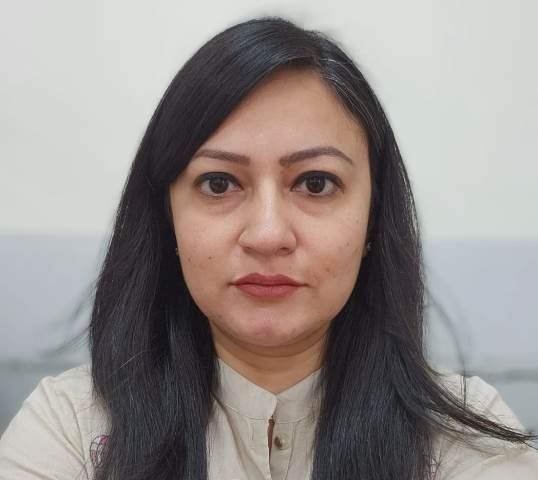
Er Priyanka Mahajan
In the long arc of India’s democratic journey, there are moments that feel less like policy decisions and more like turning points in history. The enactment of the Women’s Reservation Bill—formally known as the Nari Shakti Vandan Adhiniyam—is one such moment. With its promise to reserve one-third of seats for women in legislatures, it signals not just political reform, but a quiet revolution.
At the heart of this transformation stands our Prime Minister Narendra Modi, who pushed forward a bill that had lingered in debate and remained trapped between intent and indecision for nearly three decades. The government led by Narendra Modi did what governments before it could not—turn a 27-year-old promise into law. In doing so, it did not merely pass a bill; it altered the future of Indian women & the trajectory of India’s democracy.
While the move itself speaks volumes, its deeper significance lies in what it acknowledges: that India’s women are not merely participants in democracy & development—they are its equal architects.
The Stark Reality of Numbers, From Silence to Strength - India today has around 15 lakh elected women representatives in Panchayati Raj institutions, the highest in the world. This is not symbolic participation—it is proven governance. And yet, at the highest level, representation remains limited. India’s Lok Sabha has 543 seats. After the 33% reservation is implemented on ground, 181 seats would be allocated to women. Currently, women hold about 82 seats—roughly 15% of the Lok Sabha.
The Jammu and Kashmir Legislative Assembly, for instance, has only 4 women representatives just 4.44% of total representation. This raises an uncomfortable but necessary question: Why, despite proven capability, are women still so underrepresented?
The answer lies not in ability, but in access. Even today, many capable women never make it to the electoral stage—not because they cannot lead, but because they are not given the chance.
India’s history is rich, but it is also layered with the realities of a deeply patriarchal society where women were often confined to domestic roles, their voices limited in public and political spaces & decision-making spaces remained largely male-dominated. Politics, seen as an extension of power and public life, remained largely inaccessible to women. Social expectations, financial barriers, and other biases further limited their entry. Even as the nation gained independence, representation remained uneven. The Constitution promised equality, but social structures were slower to change.
And yet, Indian women have always found ways to rise. From freedom fighters like Rani Lakshmibai, Sarojini Naidu, and Aruna Asaf Ali—who stood shoulder to shoulder with men—to scientists like Kalpana Chawla and Tessy Thomas, who proved that the sky—quite literally—was not the limit.
Consider also the inspiring examples of women officers who have led from the front in critical national operations, including missions like Operation Sindoor. Their leadership under pressure, strategic clarity, and courage reflect a simple truth: capability is not defined by gender.
And yet, despite this legacy of excellence, women’s political representation has remained strikingly low. Today, the Women’s Reservation Bill stands as an institutional recognition of that journey—a bridge between constitutional ideals and lived reality.
The bill must be viewed not merely as a measure of numerical inclusion, but as a potential catalyst for qualitative change. Greater representation can reshape legislative priorities, diversify perspectives in policymaking, and deepen democratic legitimacy.
However, the true transformation hinges on one crucial milestone: its implementation before the 2029 general elections.
Beyond Representation: A Cultural Shift - The significance of this bill extends beyond numbers. It challenges a centuries-old mindset. It tells every young girl in a remote village in Kashmir or Kerala that leadership is not an exception—it is a possibility.
When more women enter legislative bodies, the nature of debate changes. Policies become more inclusive, governance becomes more empathetic, and democracy becomes more representative of its people. This is not about replacing one voice with another—it is about completing the conversation.
This transformation is already visible under PM Modi’s government initiatives like Beti Bachao Beti Padhao or the financial inclusion through Jan Dhan accounts—through the Pradhan Mantri Jan Dhan Yojana—where women have been primary beneficiaries. This has helped Indian women to move from the margins to the mainstream.
These interventions, while varied in scope, point toward a broader shift: from viewing women primarily as beneficiaries of welfare to recognising them as active participants in economic and social transformation. History will record this reform in legislative terms, but its impact will be deeply human. Generations of women who were told to wait their turn may finally see the doors of power open wider.
This reform is not the end of a journey—it is the beginning of a new chapter. And in that quiet shift, there is a moment of acknowledgment—of leadership that chose to act, of a government that recognized the urgency of inclusion, and of a Prime Minister who lent momentum to a long-awaited change.
India’s democracy has always evolved through bold steps. With the Women’s Reservation Bill, it makes one more move—towards balance, towards fairness, and towards a future where governance truly reflects the strength of all its people.
(Disclaimer: The views, observations and opinions expressed in above write up of Scoop News are strictly author's own. Scoop News does not take any onus or liability for the veracity, accuracy, validity, completeness, suitability of any of information in the above given write up. The information, facts or figures appearing in the write up in no way manifest the position, standpoint or stance of Scoop News and the Scoop News does not assume any encumbrance or answerability of the same. All disputes are subject to the exclusive jurisdiction of competent Courts and Forums in Jammu City Only)
Editor
Scoop News,(scoopnews.in)..
...
... |
| |
|
|
Share this Story |
|
|
|
|
|
|
|
| |
|
|
| |
|
|