| News Details |
| Dead Gen-Z and Pakistan’s Future | | 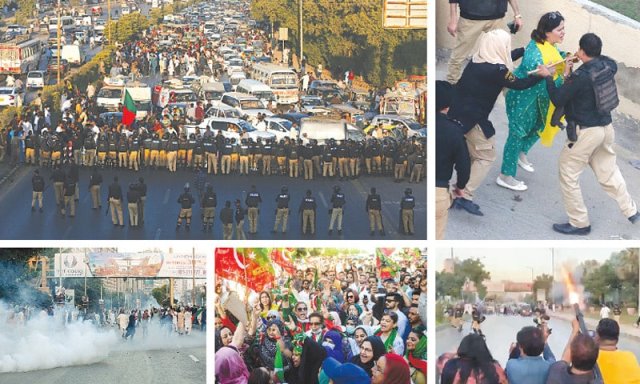
By Fatima Baloch and Dr K N Pandita
Let us assume that the Tehreek-e-Insaf (PTI)–led protests and the so-called revolutionary riots of September 2023 had succeeded. What would have been the fate of the PML-N, PPP, and the top military leadership? They would likely have faced trials, accountability, and punishment—because successful revolutions inevitably hold those in power responsible. Conversely, when a revolution fails, it is labeled a rebellion, and those involved face severe repercussions.
In modern state politics, when ruling parties are corrupt and fail to serve national interests, and when opposition parties are weak, ineffective, or secretly aligned with those in power, the public inevitably suffers from inflation, poverty, and unemployment. When people are politically aware, educated, and deeply connected to their country beyond ethnic or communal identities, mass uprisings often emerge to rescue the state from oppressive rulers who neither care for the nation nor deliver public welfare. Recent examples include Sri Lanka, Bangladesh, and Nepal, where young people mobilized against authoritarian governments and dysfunctional democratic systems. In these movements, youth blocked roads, highways, streets, and key government institutions such as banks and industries to paralyze the state and force political leadership to resign. Despite daily violence and heavy losses, people persisted with greater resolve, fully aware that revolutions demand sacrifice—and that failed revolutions are later branded as mutinies, erasing the sacrifices of those who gave their lives for justice.
In July 2024, when the people of Bangladesh rose against Prime Minister Sheikh Hasina’s government, six individuals were killed and approximately fifty injured on the first day of protests. That night, the army and police launched widespread crackdowns and committed serious atrocities. The government announced that no one should come out onto the streets the following day.
However, the people believed that retreating would betray the martyrdom of the six fallen protesters. They feared that silence would allow the state to brand them as rebels and crush their movement entirely. The next day, citizens returned to the streets with even greater determination. Instead of gathering at symbolic locations, they blocked roads, industries, banks, and government buildings nationwide. That day, thirty-one more people were killed, countless others injured, and thousands arrested. Once again, the government intensified repression and warned that fear would prevent further protests.
Yet the revolutionaries understood that withdrawing would render the sacrifices of the martyrs meaningless. They believed the state would continue executions under the guise of rebellion regardless, and therefore chose to carry the revolution to its conclusion. On the third day, a massive wave of people flooded the streets. Brutality peaked, nearly one hundred people were killed, and ultimately, the revolution succeeded. History confirms that freedom is never achieved without sacrifice.
Similar lessons can be drawn from the revolutions in Nepal and Sri Lanka, as well as the Arab Spring. The September 2025 Gen-Z protests in Nepal and the March 2022 uprising in Sri Lanka against President Rajapaksa’s corrupt government demonstrate that public revolutions succeed when people stand united as one nation—sharing common goals, identity, and purpose. Crucially, leadership in these movements remained sincere, fully aware of the consequences of failure, and committed to the people.
In the unnatural state of Pakistan, however, there is neither a strong opposition nor unity among the public against an undemocratic and oppressive regime. Pakistani society remains divided along ethnic lines—Punjabi, Sindhi, Pashtun, and Baloch. The Baloch people, in particular, perceive themselves as an oppressed nation under occupation. The Pakistan Army has consistently ruled through fear, portraying threats from Israel, the United States, or India to justify militarization. This has enabled the army, elite classes, neo-rich industrialists, and politicians to capture the state through authoritarian regimes and military-backed governments. As a result, Pakistan has never witnessed a genuine revolution for democracy or public welfare.
In this context, the sentencing of human rights lawyer Imaan Zainab Mazari-Hazir and her husband, Hadi Ali Chattha, to 17 years in prison in 2026 reflects the shrinking space for dissent. Combined with Imran Khan’s imprisonment, high inflation, mass unemployment, Pakistan’s position on Gaza, ongoing military operations, and grave human rights violations, the absence of a Gen-Z-style revolution becomes evident. These conditions persist due to structural failures, the hypocrisy of Punjabi elites, and the complicity of religious political parties—particularly PTI and Imran Khan himself.
Unfortunately, PTI and Imran Khan consistently maintained a pro-military stance. Their opportunistic and self-serving leadership endangered the lives of ordinary supporters through repeated and misleading calls for revolution. PTI leadership mobilized citizens in the name of freedom, yet during critical moments abandoned them without protection, strategy, or accountability. This exposed sincere workers to repression and highlighted weak leadership and political immaturity.
Since 1947, Pakistan has suffered chronic political instability. Non-democratic practices within major political parties—including PPP, PML-N, and religious parties—have fueled corruption, inflation, and widespread poverty. Today, these parties largely operate under the direction of the military establishment, functioning as puppets rather than democratic representatives of the people.
PTI and Imran Khan followed the same trajectory. From the outset, PTI benefited from General Musharraf’s support in 2002 and later from continued backing by the military establishment. Consequently, the party functioned more as an extension of military power than as an independent democratic force. Prior to the 2018 elections, political opportunists such as Chaudhry Pervez Elahi, Shah Mehmood Qureshi, Fawad Chaudhary, Jahangir Tareen, and business tycoons joined PTI, securing victory with establishment support.
Once in power, PTI sidelined grassroots supporters. Imran Khan openly praised General Bajwa, while party leaders symbolically displayed military boots on television and declared Bajwa the “father of the nation.” Retired military officers were appointed to key state institutions, and critical ministries were handed to dual nationals. PTI governance largely served military generals rather than public welfare. Meanwhile, poverty, inflation, and unemployment worsened, and provinces such as Balochistan and Khyber Pakhtunkhwa—where existential challenges persist—were largely ignored.
When the establishment withdrew its support, PTI became politically vulnerable. The party again called for public mobilization, but leadership misled supporters, particularly Pashtuns. As a result, PTI workers now face charges of rebellion and vandalism following failed mobilizations.
Today, PTI supporters seek Imran Khan’s release and a return to power without undertaking the sacrifices witnessed in Sri Lanka, Nepal, or Bangladesh. Repeated false calls for revolution by Imran Khan and leaders such as Amin Gandapur and Afridi have demoralized the public and discouraged genuine resistance.
Pakistan’s instability also has colonial roots. The British formed the All-India Muslim League in 1905 to counter the Indian National Congress, fostering communal divisions. Pakistan emerged in 1947 through a divide-and-rule strategy rather than collective national sacrifice. Since then, mistrust among ethnic groups—Punjabis, Sindhis, Pashtuns, and Baloch—has undermined nationhood, with Punjabi elites often misleading other communities during political crises.
Revolution and prosperity require brave and sincere leadership. Pakistan has yet to witness political maturity or genuine nationhood. Events such as the 1971 breakup, religious radicalization in the 1980s, and involvement in the US-led Afghan war after 9/11 demonstrate how military dominance and neglect of marginalized regions destabilized the country. Throughout these crises, Punjabi elites and religious parties largely remained silent spectators.
Today, amid tensions involving Afghanistan, the TTP, BLA, and Pakistan’s regional policies, the country faces an uncertain future. Without democratic institutions, credible leadership, and national unity, corruption and instability will persist. Civil unrest in Khyber Pakhtunkhwa risks spreading nationwide, potentially leading to fragmentation and renewed demands for independence, particularly in Balochistan. These crises stem from entrenched elite dominance and the failure of PTI leadership to pursue meaningful reform.
Conclusion
It is often argued by some Indian intellectuals and security experts that Pakistan, as a close western neighbour and a nuclear state, poses a serious security risk to India because of its political chaos, potential takeover by religious extremist groups such as the TTP, or possible disintegration.
However, this assessment overlooks a critical reality: Pakistan’s very existence, shaped by decades of proxy warfare and state-sponsored extremism, has itself been a persistent security risk for India. Pakistan has long harboured groups such as Jaish-e-Mohammed (JeM) and Lashkar-e-Taiba (LeT), supporting proxy conflicts against India. China has also strategically used Pakistan to counter India, while the emerging Turkey-Azerbaijan-China nexus further complicates regional security dynamics.
In the context of Pakistan’s aggression toward Afghanistan, its political instability, public desperation, internal conflict with the TTP and BLA, China’s anti-Baloch policies, and the China–Pakistan Economic Corridor (CPEC) passing through Pakistan-occupied Kashmir (PoK) in violation of Indian sovereignty—including claims over the Shaksgam Valley—India cannot but act decisively to safeguard its national security interests. The potential disintegration of Pakistan and the emergence of an independent and secular Republic of Balochistan would significantly dilute China’s strategic influence in the region. India should therefore prepare contingency plans to reclaim PoK, engage with secular Baloch nationalist forces—particularly BLA leadership—and coordinate closely with Afghanistan to ensure long-term regional stability. As demonstrated in 1971, India faces both a moral obligation and a strategic imperative to support legitimate movements for self-determination.
A collapsing Pakistan dominated by extremism would further destabilize South Asia, whereas an independent and secular Balochistan could emerge as a stabilizing regional ally. Supporting Baloch aspirations, reclaiming PoK, and strengthening regional cooperation would enhance security for both India and Afghanistan. Pakistan’s longstanding policy of interference has directly contributed to the crises it confronts today.
About the Authors
==============
Fatima Baloch is a senior geopolitical and regional affairs expert who writes extensively on Afghanistan,
Balochistan, and India, with a focus on strategic dynamics and regional security.
Dr K. N. Pandita, a recipient of the Padma Shri Award, is the former Director of the Centre for Central Asian Studies, University of Kashmir.
(Disclaimer: The views, observations and opinions expressed in above write up of Scoop News are strictly author's own. Scoop News does not take any onus or liability for the veracity, accuracy, validity, completeness, suitability of any of information in the above given write up. The information, facts or figures appearing in the write up in no way manifest the position, standpoint or stance of Scoop News and the Scoop News does not assume any encumbrance or answerability of the same. All disputes are subject to the exclusive jurisdiction of competent Courts and Forums in Jammu City Only)
Editor
Scoop News,(scoopnews.in)...... |
| |
|
|
Share this Story |
|
|
|
|
|
|
|
| |
|
|
| |
|
|