| News Details |
| Indian Armed Forces Prepare for Strategic Sacrifice | | 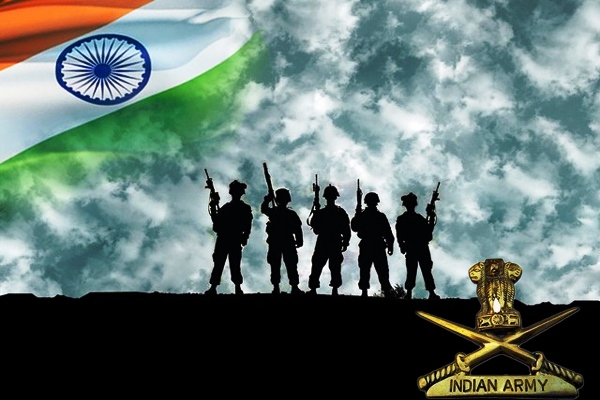
By Fatima Baloch
War is never a desirable option; however, history demonstrates that nations are sometimes compelled to resort to military action in the pursuit of peace, sovereignty, and national security. India’s experiences in 1965 and 1971 underscore this reality. Whenever issues of territorial integrity, national dignity, and security have been compromised, India has demonstrated a willingness to bear significant sacrifices in defense of its national interests and honour. These conflicts, though costly, ultimately reshaped the regional order and contributed to long-term strategic stability.
Over time, Pakistan has altered the nature of its confrontation with India, shifting from conventional warfare to asymmetric and proxy strategies. This shift has included the instrumentalization of religion, the sponsorship of non-state militant actors, and the deepening of strategic coordination with China, particularly in contested border regions. Following Operation Sindoor in May 2025—conducted in retaliation for the Pahalgam terrorist attacks—and a ceasefire widely viewed as fragile, India has maintained an elevated level of military preparedness. This posture is reflected in large-scale military exercises, the frequent issuance of Notices to Airmen (NOTAMs), accelerated procurement and indigenous production of advanced weapon systems, and the expanded deployment of unmanned platforms. As of January 2026, India is also reported to be developing a dedicated rocket and missile force.
Collectively, these developments indicate a sustained readiness posture, reflecting both a willingness to endure significant sacrifices for Indian national security and the potential for planning a large-scale conventional conflict with Pakistan, reminiscent of the wars of 1965 and 1971. These preparations are unfolding amid growing public fatigue in India over recurring casualties from Pakistan-sponsored proxy violence. The evolving security environment must also be understood in the context of the secular Baloch national struggle; the Tehreek-i-Taliban Pakistan’s (TTP) sustained pressure on the Pakistan Army in Khyber Pakhtunkhwa; Pakistan’s repression of Baloch and Pashtun populations; the Pakistan–China nexus; and China’s ongoing challenges to Indian sovereignty through the China–Pakistan Economic Corridor (CPEC). The corridor traverses Pakistan-occupied Kashmir (PoK) and includes China’s claim over the Shaksgam Valley (Trans-Karakoram Tract), a 5,180-square-kilometer area ceded under the 1963 Sino-Pakistan boundary agreement. Taken together, these factors underscore a rapidly evolving regional security landscape that demands sustained strategic attention.
Equally significant is India’s long-term strategic planning, shaped by historical experience. South Asia’s security dynamics underwent a decisive transformation in the 1980s, when US-, Pakistani-, and Saudi-backed militant groups were trained and deployed in Afghanistan during the Soviet intervention. This environment emboldened Pakistan’s then Chief of Army Staff, General Zia-ul-Haq, who articulated the doctrine of “bleeding India with a thousand cuts.” Over time, this approach evolved into a strategy centered on low-cost, irregular warfare conducted through ideologically motivated militant groups designed to inflict disproportionate damage on Indian civilian and military targets.
Small, well-trained terrorist cells—often operating with facilitation from Pakistan’s Border Action Team (BAT)—have repeatedly infiltrated Indian territory to carry out high-profile attacks. In response, India has largely relied on diplomatic engagement, evidence submission, and appeals to international institutions, including the United Nations. Meanwhile, Pakistan has faced limited accountability despite persistent allegations of state sponsorship of terrorism.
India has long suffered the consequences of asymmetric warfare, as evidenced by tragic incidents such as the 26/11 Mumbai attacks, the Uri attack in 2016, the Pulwama attack in 2019, and the Pahalgam attack in 2025. These attacks were aimed at igniting Hindu–Muslim riots and plunging India into internal violence. The pattern is clear: Pakistan’s deep state continues to use terrorist organizations such as LeT (Lashkar-e-Taiba) and JeM (Jaish-e-Mohammad) as instruments of state policy, while India’s measured responses have failed to create a lasting deterrent. This failure largely stems from India’s reluctance to target the root cause of the problem—Pakistan’s military infrastructure. Had India retaliated by striking Pakistani military cantonments and installations after the 26/11 attacks, Uri, and Pulwama, the recurrence of such incidents might have been avoided. Pakistan understands that India continues to pursue low-level terrorists rather than directly confronting the core perpetrators. This situation has been enabled by a combination of weak political leadership and Pakistan’s consistent use of war threats as a form of blackmail.
It must be made clear that, according to Islamic teachings, jihad does not mean killing innocent people. Love for one’s motherland and nationalism are considered part of Islamic values. Therefore, it is unreasonable to expect Indian Muslims to follow Pakistan-backed, Punjab-dominated terror groups such as LeT and JeM against India. In the Quran, Prophet Muhammad is referred to as Rahmat-ul-Alameen (Mercy to All Humanity), meaning he was a leader for all humankind, not only Muslims. Consequently, JeM and LeT terrorists have nothing to do with Islam; rather, they have severely damaged its image. According to prominent Indian Muslim scholars such as Shamail Nadwi and others, Pakistan cannot be considered a truly Islamic country. Despite this, Pakistan continues to misuse Islam against India. Indian Muslims are generally more prosperous, secure, and well-integrated than their Pakistani counterparts. True Islamic values are practiced in societies that uphold justice and human dignity—principles that are better reflected in India than in Pakistan. Pakistani Punjabi elites and their religious scholars remain largely silent on human rights violations, extrajudicial killings, mass murders, and the genocide of the Baloch people.
Globally, India has produced many respected Islamic scholars, including Sheikh Abubakr Ahmad, Zakir Naik, Wahiduddin Khan, and S. Nadwi. When Zakir Naik visited Pakistan in September 2024, several Pakistani clerics attempted to provoke him into speaking against India. Instead, he criticized Pakistan. While he has spoken against governments and in favor of communal harmony, he has never spoken against India or the Indian Army.
Conclusion
Indian policymakers and the national security establishment must weigh whether enduring losses from prolonged proxy conflict impose a greater strategic cost than a decisive conventional engagement aimed at fundamentally altering Pakistan’s strategic calculus. It is often argued by some Indian intellectuals and security experts that Pakistan’s disintegration or a potential takeover by extremist groups such as the TTP would pose an unacceptable security risk for India. However, this assessment overlooks a critical reality: Pakistan’s existing state structure—shaped by decades of proxy warfare and state-sponsored extremism—has itself constituted a persistent security threat to India.Pakistan has long harboured groups such as Jaish-e-Mohammed (JeM) and Lashkar-e-Taiba (LeT), facilitating proxy conflicts against India. China has strategically leveraged Pakistan to counter Indian influence, while the emerging Turkey–Azerbaijan–China alignment further complicates regional security dynamics.
Pakistan’s current internal challenges—including conflict with the TTP, the Baloch Liberation Army (BLA) in Balochistan, strained relations with Afghanistan, and growing dependence on China—have placed the state under significant pressure. Historical precedent from 1971 demonstrates that India has previously acted decisively despite international opposition, ultimately reshaping the regional balance through the creation of Bangladesh. Advocates of a more assertive policy argue that comparable resolve may be required today, particularly amid instability in Balochistan and Khyber Pakhtunkhwa.
From this perspective, a fragmented Pakistan could reduce China’s strategic leverage in South Asia and weaken the effectiveness of Pakistan’s religious diplomacy in the Muslim world. As Pakistan confronts deepening internal instability, India may need to prepare contingency plans regarding PoK, engage with secular Baloch nationalist actors, and coordinate more closely with Afghanistan to promote long-term regional stability. Supporting self-determination movements and strengthening regional partnerships could contribute to a more stable South Asia. A Pakistan increasingly dominated by extremism risks becoming a chronic source of insecurity, whereas a peaceful and autonomous Balochistan could serve as a stabilizing factor.
Finally, to counter Pakistan’s use of religious narratives in the Muslim world, India could deploy well-qualified Indian Muslim diplomats alongside diverse diplomatic teams to articulate India’s pluralistic credentials and highlight Pakistan’s record on human rights and internal conflicts. Such an approach would strengthen India’s strategic communication and reinforce its standing in regional and global forums.
About the Author
Fatima Baloch is a senior geopolitical and regional affairs analyst who writes extensively on Afghanistan, Balochistan, and India, with a focus on strategic dynamics and regional security.
(Disclaimer: The views, observations and opinions expressed in above write up of Scoop News are strictly author's own. Scoop News does not take any onus or liability for the veracity, accuracy, validity, completeness, suitability of any of information in the above given write up. The information, facts or figures appearing in the write up in no way manifest the position, standpoint or stance of Scoop News and the Scoop News does not assume any encumbrance or answerability of the same. All disputes are subject to the exclusive jurisdiction of competent Courts and Forums in Jammu City Only)
Editor
Scoop News,(scoopnews.in)......
... |
| |
|
|
Share this Story |
|
|
|
|
|
|
|
| |
|
|
| |
|
|